

Publicado en 2022 para Patreon
Cada podcast es un reto. Este en ha sido una aventura apasionante.
En las dos semanas que estuve preparándolo, me dejé llevar por madrigueras que nunca pensaba estudiar y acabé entre la Guerra de Independencia de los EEUU en 1775 y la legalización de la tenencia de oro por parte del Presidente Gerald Ford en 1977. Un total de 200 años de historia en los que se apoya el sistema económico y financiero en el que vivimos en 2022.
Este artículo es la cronología que me fui construyendo para poder llegar al podcast con una base. Es un documento de trabajo con sus faltas de ortógrafías, erratas y demás, y también mezcla algo de inglés aunque la gran mayoría está en Español.
Este artículo estará compartido para Selenitas, Colonos y Voyager en mi Patreon y también aquí con un Paywall de 6000 Sats. Se liberará por completo si se llega a los 600.000 sats en total.
Cronología de la Orden 6102
[[1775]] - [[1783]] - Guerra de Independencia de EEUU - Gran Bretaña
4 julio de [[1776]] - Declaración de independencia de EEUU
7 enero de [[1782]] - Bank of North America
Fue el primer banco constituido en los EEUU y sirvió como el primer banco central de facto
Fue público hasta 1785 y privado hasta 1929.
25 febrero [[1791]] - [[1811]] - First Bank of the United States
Constituido por el congreso de los EEUU para servir durante 20 años
Tomo el testigo del Bank of North America como banco central pero con funciones muy limitadas a las que conocemos hoy:
No establecían política monetaria
No regulaban los bancos privados
No custodiaban su exceso de reservas
No actuaban como prestamista de última instancia
Eran "nacionales" porque tenían derecho a tener sucursales en múltiples estados y prestarle dinero al gobierno americano. El resto de bancos estaba autorizado únicamente por cada uno de los estados y no podían operar fuera de ellos.
febrero [[1816]] - [[1836]] - Second Bank of the United States
Sin bancos centrales
Bancos estatales que no podían operar fuera
Tomó el testigo del First Bank
[[1836]] - [[1862]] - Free Banking Era
El dinero era privado y cada banco podía emitir los suyos
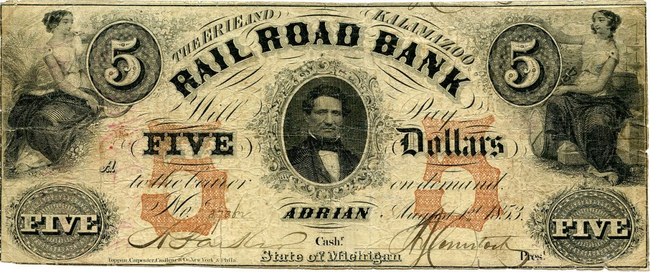
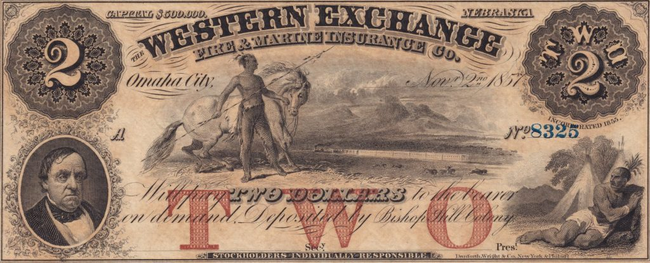
[[1846]] - Creación de el Tesoro de los Estados Unidos - United States Treasury
La administración de Polk creó el sistema de el Tesoro de los Estados Unidos
Movió fondos públicos que estaban en bancos privados a sucursales públicas del Tesoro para financiar la Guerra Mexicana.
No tenían todavía moneda nacional ni un mecanismo para emitir moneda.
[[1861]] - [[1865]] - Guerra Civil Americana
Lincoln y el congreso veían dificultad de financiar la guerra sin una moneda nacional.
[[1862]] - Ley del Curso Legal - Legal Tender Act
💵 Permitió la emisión de $150 millones de billetes nacionales (national notes) conocidos como "Greenbacks" y que obligaba a que fueran aceptados en lugar de monedas de oro y plata.
Los billetes estaban respaldados únicamente por la promesa del gobierno nacional de canjearlos y su valor dependía de la confianza del público en el gobierno, así como de la capacidad del gobierno de entregar especies a cambio de los billetes en el futuro.
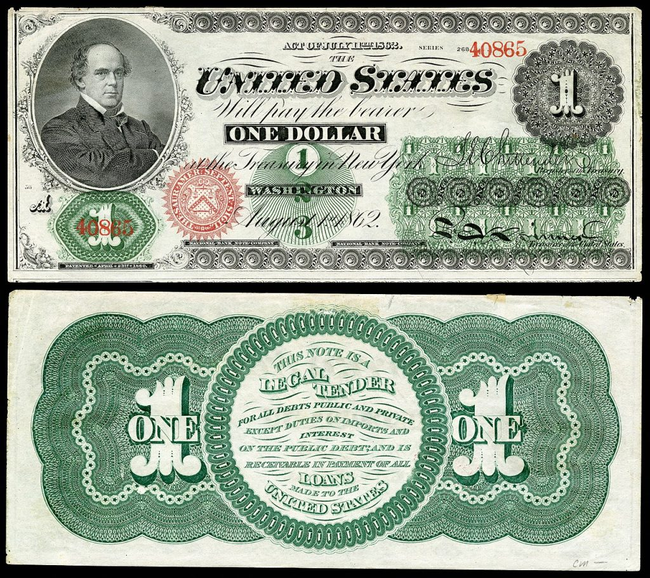
Billete Greenback emitido por el Tesoro americano
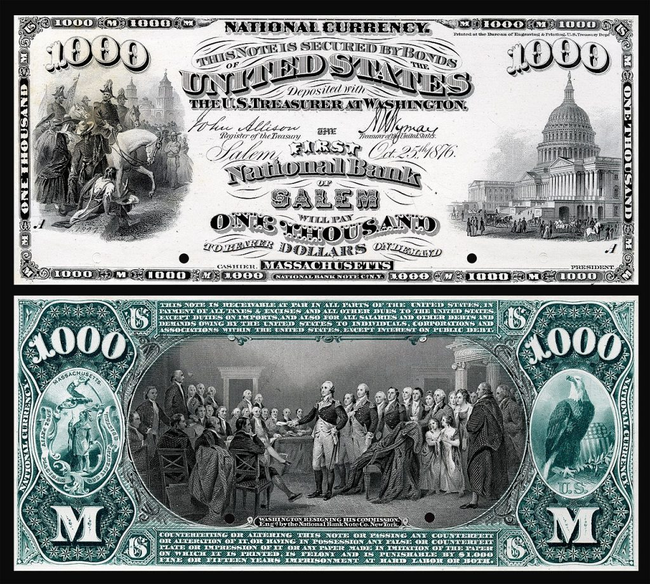
[[1863]] & [[1866]] - Ley de la Banca Nacional - National Banking Acts
(https://www.alt-m.org/2021/05/20/how-u-s-government-paper-currency-began-and-how-private-banknotes-ended/)
Objetivos:
Crear una moneda nacional única (un año antes la ley se llamo National Currency Act)
Sacar de circulación el dinero privado aplicándole un impuesto del 10%
Crear un sistema de licencias bancarias federales (antes cada estado tenía esa potestad)
Recaudar dinero para pagar el coste de la guerra
Se establece un sistema nacional de bancos
La ley de la Banca Nacional autorizó la constitución federal de bancos emisores de billetes.
Los estatutos vinculaban el derecho de emisión de billetes a la compra de bonos federales elegibles por parte de un banco nacional.
Los Billetes de la banca nacional estaban respaldados por bonos
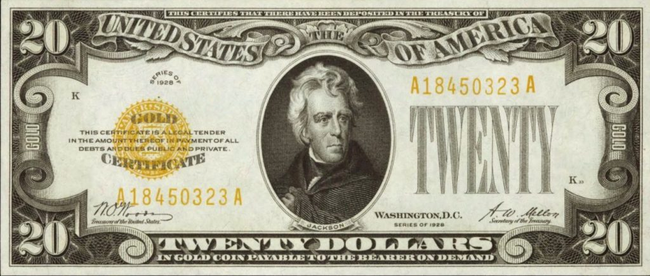
[[1865]] - [[1934]] - 💵 El Tesoro americano emite Gold Certificates
Una forma más cómoda de pagar en oro
Respaldado por oro del Tesoro americano
[[1873]] - Pánico del 1873
[[1893]] - Pánico del 1893
[[1907]] - Pánico de 1907
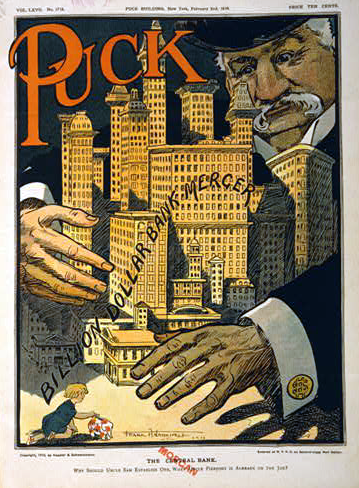
Rothbard sobre el pánico de 1907 causando la creación de la FED dijo en "The Case Agains the Fed" lo siguiente:
Descarga el libro aquí: https://mises.org/library/case-against-fed-0
The official legend holds that the idea of a Central Bank in America originated after the Panic of 1907
Los bancos, después de vivir el pánico dijeron que era "desesperádamente necesario" establecer un "Lender of last resource". Era necesaria una drástica reforma.
All this is rubbish. The Panic of 1907 provided a convenient handle to stir up the public and spread pro-Central Bank propaganda.
2 razones:
1 In actuality, the banker agitation for a Central Bank began as soon as the 1896 McKinley victory over Bryan was secured.
2 The second crucial part of the official legend claims that a Central Bank is necessary to curb the commercial banks' unfortunate tendency to over-expand, such booms giving rise to subsequent busts. An "impartial" Central Bank, on the other hand, driven as it is by the public interest, could and would restrain the banks from their natural narrow and selfish tendency to make profits at the expense of the public weal
23 dic [[1913]] - Creación de la Reserva Federal a través del "Federal Reserve Act"
The Federal Reserve Act created the Federal Reserve System, consisting of twelve regional Federal Reserve Banks jointly responsible for
gestionar la emisión monetaria del país
dar préstamos y proveer supervisión bancaria
ejercer de prestamista de última instancia
To lead the Federal Reserve System, the act established the Federal Reserve Board of Governors, members of which are appointed by the president.
El congreso de los EEUU, en un enmienda posterior, estableció 3 objetivos clave de la FED en cuanto a política monetaria. La FED debe promover:
máximo empleo
estabilidad de los precios
Precio del dinero moderado a largo plazo
The Federal Reserve System has a "unique structure that is both public and private"[54] and is described as "independent within the government" rather than "independent of government".
💵 Aparece el nuevo billete de la Reserva Federal
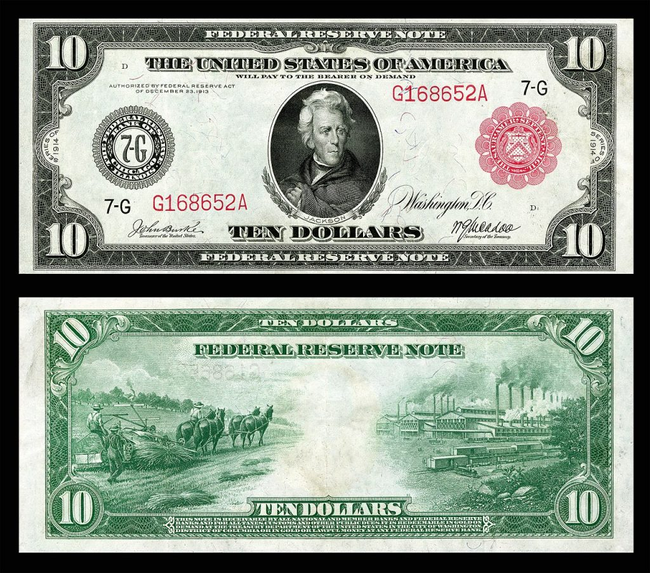
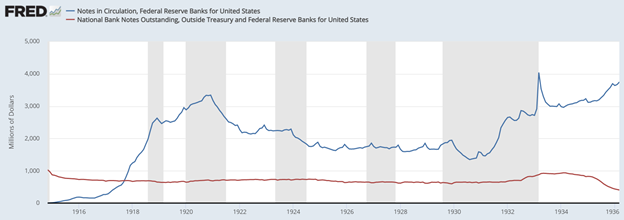
Convivencia con los billetes de la Banca Nacional
28 jul [[1914]] - Inicio [[Primera Guerra Mundial]] + Fin Patrón Oro clásico
Se suspende el Patrón Oro Clásico
Fin de la guerra el 11 de noviembre de 2018
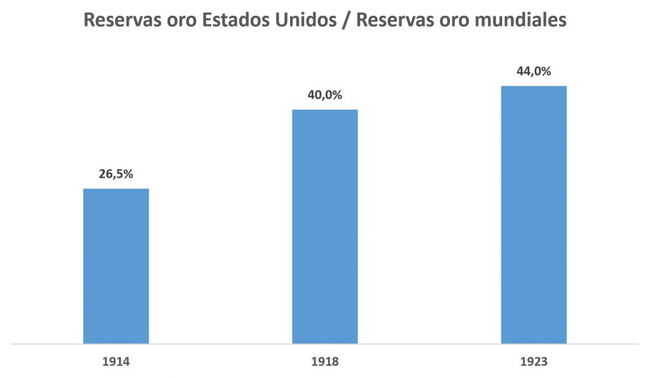
Estados Unidos, por su parte, pasó de ser un país deudor neto con el resto del mundo antes de la Primera Guerra Mundial, a ser un acreedor neto después de la guerra. Estados Unidos durante este periodo acumula unas enormes reservas de oro, en 1914 contaban con el 26,5% de las reservas mundiales de oro depositadas en bancos centrales, en 1918 la cifra subió hasta el 40%, en 1923 llegó a ser el 44% (Glasner, 1989).
Los diferentes países que querían volver al patrón oro debían levantar las restricciones impuestas a operar en el mercado de oro y de divisas, acumular reservas de oro, y volver a fijar una paridad o tipo de cambio con el oro. Este último punto es el motivo de la controversia que intenta dirimir este artículo.
29 octubre [[1929]] - Martes Negro y el inicio del Crack del 29
La llamada Gran Depresión se originó en Estados Unidos, a partir de la caída de la bolsa de valores de Nueva York el martes 29 de octubre de 1929 (conocido como crack del 29 o Martes Negro, aunque cinco días antes, el 24 de octubre, ya se había producido el Jueves Negro), y rápidamente se extendió a casi todos los países del mundo.
Sin entrar mucho en detalle pero,
4 marzo [[1933]] - [[Franklin D. Roosevelt]] asumió la 32 presidencia de EEUU
President Roosevelt was challenged to decrease unemployment, raise wages and increase the money supply, but was restricted in doing so by the United States' strict adherence to the gold standard.[3] - https://en.wikipedia.org/wiki/Gold_Reserve_Act
9 marzo [[1933]] - [[Emergency Banking Relief Act (EBRA)]]
Espectacular la info de este link https://www.federalreservehistory.org/essays/emergency-banking-act-of-1933
Se da para aportar confianza en el sector bancario que estaba en constante riesgo de corrida bancaria por la pérdida de confianza de los depositantes que hacían colas para retirar su efectivo.
En la primera charla del Presidente [[Franklin D. Roosevelt]] después del EBRA dijo lo siguiente:
“Les puedo aseguridad de que su dinero está más seguro en un banco reabierto que debajo de un colchón.”
— President [[Franklin D. Roosevelt]] in his first Fireside Chat, March 12, 1933/file
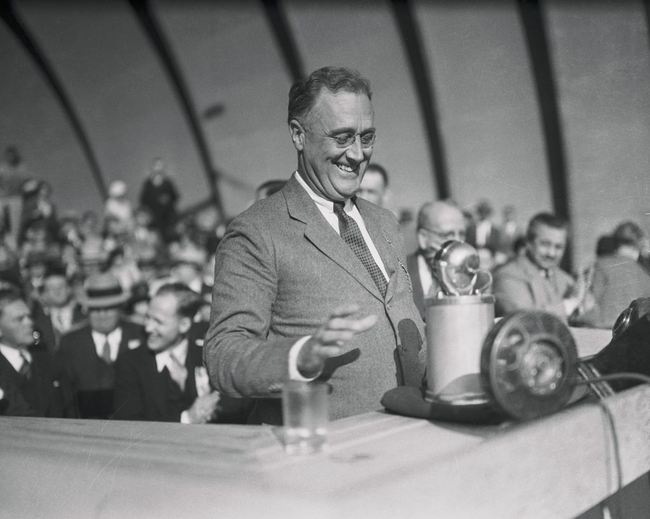
27 Sep 1932, Hollywood, Los Angeles, California, USA --- Franklin D. Roosevelt, Governor of New York, speaking at Los Angeles during his campaign for the presidency in 1932. --- Image by © Bettmann/CORBIS
Aquí texto:
    President Franklin D. Roosevelt: My friends, I want to talk for a few minutes with the people of the United States about banking—to talk with the comparatively few who understand the mechanics of banking, but more particularly with the overwhelming majority of you who use banks for the making of deposits and the drawing of checks. I want to tell you what has been done in the last few days, and why it was done, and what the next steps are going to be. I recognize that the many proclamations from the state capitals and from Washington, the legislation, the Treasury regulations and so forth, couched for the most part in banking and legal terms, ought to be explained for the benefit of the average citizen. I owe this in particular because of the fortitude and the good temper with which everybody has accepted the inconvenience and the hardships of the banking holiday. And I know that when you understand what we in Washington have been about I shall continue to have your cooperation as fully as I have had your sympathy and your help during the past week.
    First of all, let me state the simple fact that when you deposit money in a bank the bank does not put the money into a safe deposit vault. It invests your money in many different forms of credit—in bonds, in commercial paper, in mortgages, and in many other kinds of loans. In other words, the bank puts your money to work to keep the wheels of industry and of agriculture turning round. A comparatively small part of the money that you put into the bank is kept in currency—an amount which in normal times is wholly sufficient to cover the cash needs of the average citizen. In other words, the total amount of all the currency in the country is only a comparatively small proportion of the total deposits in all the banks of the country.
    What, then, happened during the last few days of February and the first few days of March? Because of undermined confidence on the part of the public, there was a general rush by a large portion of our population to turn bank deposits into currency or gold—a rush so great that the soundest banks couldn’t get enough currency to meet the demand. The reason for this was that on the spur of the moment it was, of course, impossible to sell perfectly sound assets of a bank and convert them into cash except at panic prices far below their real value.
    By the afternoon of March 3, a week ago last Friday, scarcely a bank in the country was open to do business. Proclamations closing them in whole or in part had been issued by the governors in almost all of the states.
    It was then that I issued the proclamation providing for the national bank holiday, and this was the first step in the government’s reconstruction of our financial and economic fabric.
    The second step, last Thursday, was the legislation promptly and patriotically passed by the Congress confirming my proclamation and broadening my powers so that it became possible in view of the requirement of time to extend the holiday and lift the ban of that holiday gradually in the days to come. This law also gave authority to develop a program of rehabilitation of our banking facilities, and I want to tell our citizens in every part of the nation that the national Congress—Republicans and Democrats alike—showed by this action a devotion to public welfare and a realization of the emergency and the necessity for speed that it is difficult to match in all our history.
    The third stage has been the series of regulations permitting the banks to continue their functions to take care of the distribution of food and household necessities and the payment of payrolls.
    This bank holiday, while resulting in many cases in great inconvenience, is affording us the opportunity to supply the currency necessary to meet the situation. Remember that no sound bank is a dollar worse off than it was when it closed its doors last week. Neither is any bank which may turn out not to be in a position for immediate opening. The new law allows the twelve federal reserve banks to issue additional currency on good assets and thus banks that reopen will be able to meet every legitimate call. The new currency is being sent out by the Bureau of Engraving and Printing in large volume to every part of the country. It is sound currency because it is backed by actual, good assets.
    Another question that you will ask is this: why are all the banks not to be reopened at the same time? The answer is simple, and I know you will understand it. Your government does not intend that the history of the past few years shall be repeated. We do not want and will not have another epidemic of bank failures.
    As a result, we start tomorrow, Monday, with the opening of banks in the twelve federal reserve bank cities—those banks which on first examination by the Treasury have already been found to be all right. That will be followed on Tuesday by the resumption of all other functions by banks already found to be sound in cities where there are recognized clearing houses. That means about 250 cities of the United States. In other words, we are moving as fast as the mechanics of the situation will allow us.
    On Wednesday and succeeding days banks in smaller places all through the country will resume business, subject, of course, to the government’s physical ability to complete its survey. It is necessary that the reopening of banks be extended over a period in order to permit the banks to make applications for the necessary loans, to obtain currency needed to meet their requirements, and to enable the government to make commonsense checkups.
    Please let me make it clear to you that if your bank does not open the first day, you are by no means justified in believing that it will not open. A bank that opens on one of the subsequent days is in exactly the same status as the bank that opens tomorrow.
    I know that many people are worrying about state banks that are not members of the Federal Reserve System. There is no occasion for that worry. These banks can and will receive assistance from member banks and from the Reconstruction Finance Corporation and of course they are under the immediate control of the state banking authorities. These state banks are following the same course as the national banks except that they get their licenses to resume business from the state authorities, and these authorities have been asked by the secretary of the treasury to permit their good banks to open up on the same schedule as the national banks. And so I am confident that the state banking departments will be as careful as the national government in the policy relating to the opening of banks and will follow the same broad theory.
    It is possible that when the banks resume a very few people who have not recovered from their fear may again begin withdrawals. Let me make it clear to you that the banks will take care of all needs except of course the hysterical demands of hoarders—and it is my belief that hoarding during the past week has become an exceedingly unfashionable pastime in every part of our nation. It needs no prophet to tell you that when the people find that they can get their money—that they can get it when they want it for all legitimate purposes—the phantom of fear will soon be laid. People will again be glad to have their money where it will be safely taken care of and where they can use it conveniently at any time. I can assure you, my friends, that it is safer to keep your money in a reopened bank than it is to keep it under the mattress.
    The success of our whole national program depends, of course, on the cooperation of the public—on its intelligent support and its use of a reliable system.
    Remember that the essential accomplishment of the new legislation is that it makes it possible for banks more readily to convert their assets into cash than was the case before. More liberal provision has been made for banks to borrow on these assets at the reserve banks and more liberal provision has also been made for issuing currency on the security of these good assets. This currency is not fiat currency. It is issued only on adequate security, and every good bank has an abundance of such security.
    One more point before I close. There will be, of course, some banks unable to reopen without being reorganized. The new law allows the government to assist in making these reorganizations quickly and effectively and even allows the government to subscribe to at least a part of any new capital that may be required.
    I hope you can see, my friends, from this essential recital of what your government is doing that there is nothing complex, nothing radical, in the process.
    We had a bad banking situation. Some of our bankers had shown themselves either incompetent or dishonest in their handling of the people’s funds. They had used the money entrusted to them in speculations and unwise loans. This was, of course, not true in the vast majority of our banks, but it was true in enough of them to shock the people of the United States for a time into a sense of insecurity and to put them into a frame of mind where they did not differentiate, but seemed to assume that the acts of a comparative few had tainted them all. And so it became the government’s job to straighten out this situation and to do it as quickly as possible. And that job is being performed.
    I do not promise you that every bank will be reopened or that individual losses will not be suffered, but there will be no losses that possibly could be avoided; and there would have been more and greater losses had we continued to drift. I can even promise you salvation for some at least of the sorely pressed banks. We shall be engaged not merely in reopening sound banks but in the creation of more sound banks through reorganization.
    It has been wonderful to me to catch the note of confidence from all over the country. I can never be sufficiently grateful to the people for the loyal support that they have given me in their acceptance of the judgment that has dictated our course, even though all our processes may not have seemed clear to them.
    After all, there is an element in the readjustment of our financial system more important than currency, more important than gold, and that is the confidence of the people themselves. Confidence and courage are the essentials of success in carrying out our plan. You people must have faith; you must not be stampeded by rumors or guesses. Let us unite in banishing fear. We have provided the machinery to restore our financial system; and it is up to you to support and make it work.
    It is your problem, my friends, your problem no less than it is mine. Together we cannot fail.
El EBRA amplió los poderes presidenciales durante una crisis bancaria en 5 puntos:
Title I expanded presidential authority during a banking crisis, including retroactive approval of the banking holiday and regulation of all banking functions, including “any transactions in foreign exchange, transfers of credit between or payments by banking institutions as defined by the President, and export, hoarding, melting, or earmarking of gold or silver coin.” < Aquí se masca la tragedia ya de la 6102
Title II gave the comptroller of the currency the power to restrict the operations of a bank with impaired assets and to appoint a conservator, who “shall take possession of the books, records, and assets of every description of such bank, and take such action as may be necessary to conserve the assets of such bank pending further disposition of its business.” < Supervisión bancaria dura
Title III allowed the secretary of the treasury to determine whether a bank needed additional funds to operate and “with the approval of the President request the Reconstruction Finance Corporation to subscribe to the preferred stock in such association, State bank or trust company, or to make loans secured by such stock as collateral.” < libertad para emitir más billete desde designios políticos
Title IV gave the Federal Reserve the flexibility to issue emergency currency—Federal Reserve Bank Notes—backed by any assets of a commercial bank. < ahora los dolares pueden estar respaldados por activos de banca comercial
Title V made the act effective.
Autoridad del presidente para aprobar "vacaciones bancarias si lo considera"
Para regular la exportación, la acaparación, fundido o creación de joyas que usen oro y plata -- ==Se masca la tragedia de la 6102 ya aquí==
Le dio poder al interventor de la moneda a restringir operaciones a bancos con desbalances de activos -- ==Parece un mensaje para los bancos y la ciudadanía. Ahora habrá un policía que supervisará duro.==
Le dio poder al secretario del tesoro para determinar si un banco necesitaba más fondos para operar y hacérselos llegar como préstamo colateralizado con activos -- ==Libertad para que políticos impriman más==
Y por último le dio a la Reserva Federal la flexibilidad de emitir moneda de emergencia respaldado por activos de la banca comercial -- ==Parece que ahora los dólares pueden estar respaldados por activos de la banca comercial
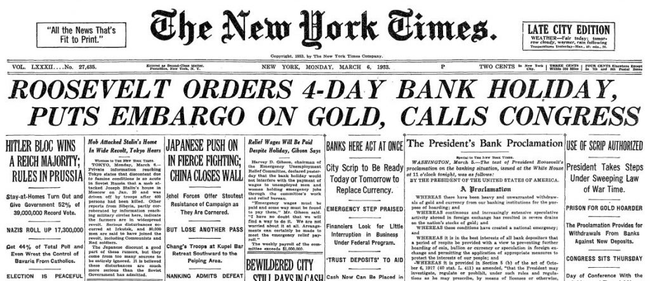
Es como que con el Emergency Banking Relief Act se empieza a normalizar eso de que se pueda imprimir más moneda en situaciones de emergencia y que todo vale,
el gobierno puede decidir directamente imprimir más a través del secretario del tesoro,
la reserva federal se puede "apropiar" de balances de banca comercial para respaldar más emisión de moneda
y el presidente tiene poderes totales para promulgar leyes sobre toda actividad financiera.
5 abril [[1933]] - [[Orden Ejecutiva - 6102]]
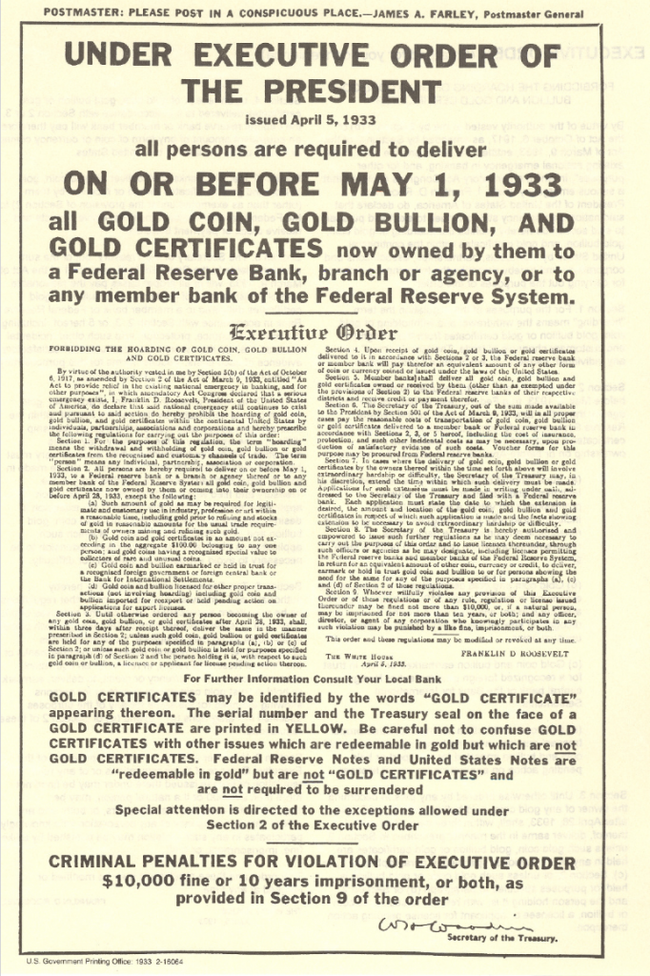
El por qué de la Orden ejecutiva 6102
The main rationale behind the order was actually to remove the constraint on the Federal Reserve preventing it from increasing the money supply during the depression. The Federal Reserve Act (1913) required 40% gold backing of Federal Reserve Notes that were issued. By the late 1920s, the Federal Reserve had almost reached the limit of allowable credit, in the form of Federal Reserve demand notes, which could be backed by the gold in its possession
De facto suspendió los contratos de oro
La orden ejecutiva 6102 requirió el intercambio forzado de casi todo el oro a papel moneda.
Se pagó la onza a 20,67$ (31,1 gramos) - equivalente a 433$ en 2021
Apoyado en la [[Ley de Comercio con el Enemigo]] [[1917]] se amenazó con penas de carcel y 10.000$
Fue una ley con la que poder confiscar cualquier propiedad de cualquiera cuyas acciones pudieran considerarse una posible amenaza al esfuerzo de guerra.
En 1933, el Congreso de los Estados Unidos enmendó la Ley al aprobar la ** [[Emergency Banking Relief Act]] ** que amplió el alcance de la Ley de Comercio con el Enemigo con respecto al acaparamiento de oro para incluir cualquier emergencia nacional declarada y no solo aquellos declarados únicamente durante tiempos de guerra. El presidente Franklin D. Roosevelt usó estas nuevas autoridades para prohibir la posesión de oro mediante la emisión de la Orden ejecutiva 6102.
Las penas de las orden ejecutiva 6102 se apoyaron en una Ley de [[1917]] (La Ley de Comercio con el Enemigo), que se promulgó para expropiar propiedades a cualquiera cuyas acciones pudieran considerarse una amenaza al esfuerzo de Guerra. Aquí no había guerra (no hasta 1939).
Se disfrazó a una crisis económica de enemigo y se vistió a los americanos propietarios de oro de traidores - Lunaticoin
Y en qué momento se pudo hacer esto? En el Ley de Alivio de la emergencia bancaria del 9 de marzo de 1933 donde se incluyó ésta situación de crisis bancaria dentro de la ley de comercio enemigo de 1917. La banca es lo que hay que salvar, el enemigo es quien se ponga en su camino.
MUY LOCO ESTO
Es curioso que se diferencia a los Federal Reserve Bank Notes y a los Gold Certificates cuando 20 años antes, en el patrón oro clásico no debería existir diferencia entre ambos no?
Curioso también que las cajas de seguridad de los americanos no fueron registradas bajo esta orden ni las siguientes. De hecho existe un caso de evasión de impuestos por el que sí que se pidió abrir una caja de seguridad y se encontraron 10.000 onzas en una caja de seguridad.
20 abril 1933 - Orden Ejecutiva 6111
Esta y las 2 órdenes que vinieron después fueron para ir tapando agujeros legales que se iban encontrando en la 6102. Todas ellas quedarían abandonadas una vez se aprobase La Ley de Reserva de Oro de 1932.
28 agosto 1933 - Orden Ejecutiva 6260
29 agosto 1933 - Orden Ejecutiva 6261
30 enero [[1934]] - Ley de Reserva de Oro (Gold Reserve Act)
The United States Gold Reserve Act of January 30, 1934 required that all gold and gold certificates held by the Federal Reserve be surrendered and vested in the sole title of the United States Department of the Treasury.
Immediately following passage of the Act, the President, Franklin D. Roosevelt, changed the statutory price of gold from $20.67 per troy ounce to $35. < Hasta luego maricarmen
This price change incentivized gold miners globally to expand production and foreigners to export their gold to the United States, while simultaneously devaluing the U.S. dollar by increasing inflation. < Mientras EEUU prohibía la exportación. Lo curioso es que el mundo le siguió la corriente.
The increase in gold reserves due to the price change resulted in a large accumulation of gold in the Federal Reserve and U.S. Treasury, much of which was stored in the United States Bullion Depository at Fort Knox and other locations. <
The increase in gold reserves increased the money supply, lowering real interest rates which in turn increased investment in durable goods. < Pagaron los de siempre
Como consecuencia de esta ley también se declararon nulas las "Clausulas Oro" que existían en los contratos anteriores al 1933 por los que los creditores podían demandar un pago en oro o oro equivalente.
Y ojo a esto que bajo esta ley se confisco oro de empresas extranjeras también!
Foreign companies even had their gold confiscated. The Uebersee Finanz-Korporation, a Swiss banking company, had $1,250,000 in gold coins that were being held in the United States. - https://en.wikipedia.org/wiki/Gold_Reserve_Act < Rusia ya tenía un precedente aquí
Más oro, más impresión de moneda, más inflación y devaluación de esta, baja de tipos de interés y aumento de la inversión en bienes durables. - Expansión monetaria tracción sangre para los estadounidenses Sobre el aumento en el precio del oro promovido apenas 8 meses después de expropiar el oro de los americanos:
Entre el 1 de mayo de 1933, fecha límite para entregar el oro y la Gold Reserve act del 30 de enero de 1934 hay 9 meses. Un subida del valor del oro del 40% en 9 meses es un 53% anualizado. O lo que es lo mismo, un x2 a la cara de todos los americanos que seguro estaban encantados de tener dólares ahora.
La Ley de Reserva de Oro de 1934 fue un ridiculización absoluta de los pobres ahorradores que tuvieron que entregar su oro un 40% más barato
Qué hicieron entonces los americanos, pagar el oro más caro a costa de aprovecharse de lo que el extranjero recordaban que valía un dólar y cruzar los dedos de que no se dieran cuenta de la gran devaluación que implicaría? Me parece una locura
Las consecuencias en las reservas de oro de de EEUU por parte de la Orden 6102 y el Gold Reserve Act fueron estratosféricas. Reservas de oro en:
1930 - 6070 toneladas
1938 - 11340 toneladas (post 6102 y Gold Reserve Act)
1942 - 20,205 toneladas (post inicio WW2)
1 septiembre [[1939]] - 14 agosto [[1945]] - Segunda Guerra Mundial
22 julio [[1944]] - Acuerdos de Bretton Woods
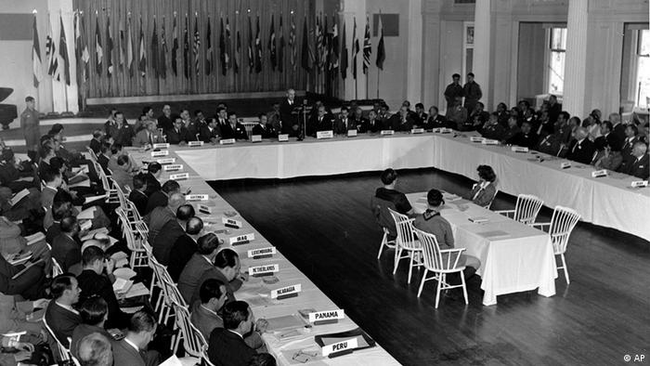
Los acuerdos de Bretton Woods son todas las resoluciones de la conferencia monetaria y financiera de las Naciones Unidas, realizada en la localidad de Bretton Woods (Nuevo Hampshire, Estados Unidos), entre el 1 y el 22 de julio de 1944, que estableció las políticas económicas mundiales que estuvieron vigentes hasta principios de la década de 1970.
se adoptó un patrón oro, en el que Estados Unidos debía mantener el precio del oro en 35,00 dólares por onza y se le concedió la facultad de cambiar dólares por oro a ese precio sin restricciones ni limitaciones.
24 abril [[1964]] - Se relaja la prohibición y se permite a los inversores privados utilizar los Certificados de Oro aunque no existe obligación a pagar en oro.
15 agosto [[1971]] - [[Richard Nixon]] suspende la convertibilidad entre el oro y el dólar
9 agosto [[1974]] - [[Gerald Ford]] asumió la 38 presidencia de EEUU
31 diciembre [[1974]] - [[Gerald Ford]] [[Pub.L. 93-373]] legaliza la propiedad privada del oro
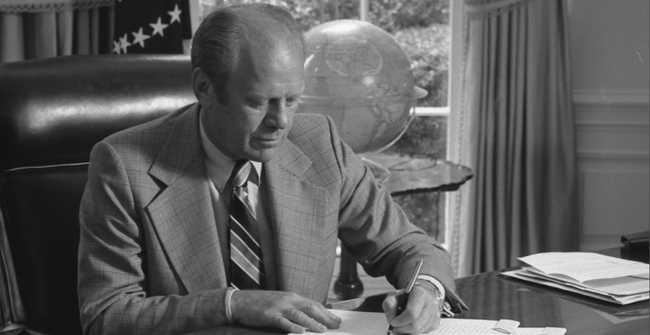
[[1977]] - [[Gerald Ford]] hizo posible volver a denominar deudas en oro
Do you like what you are reading? Subscribe to receive updates.
Unsubscribe anytime